
 GBP £
GBP £
 USD $
USD $
 CAD $
CAD $
The experience of being able to have your [book collections] critically evaluated is of course slightly nerve-wracking but in a way that makes you take the time to actually think about the selection. Many thanks for championing the importance of reading for wellbeing. It is something that I feel confident in using within my work at the library now.
- Managers and project workers
- Public libraries
- Advanced
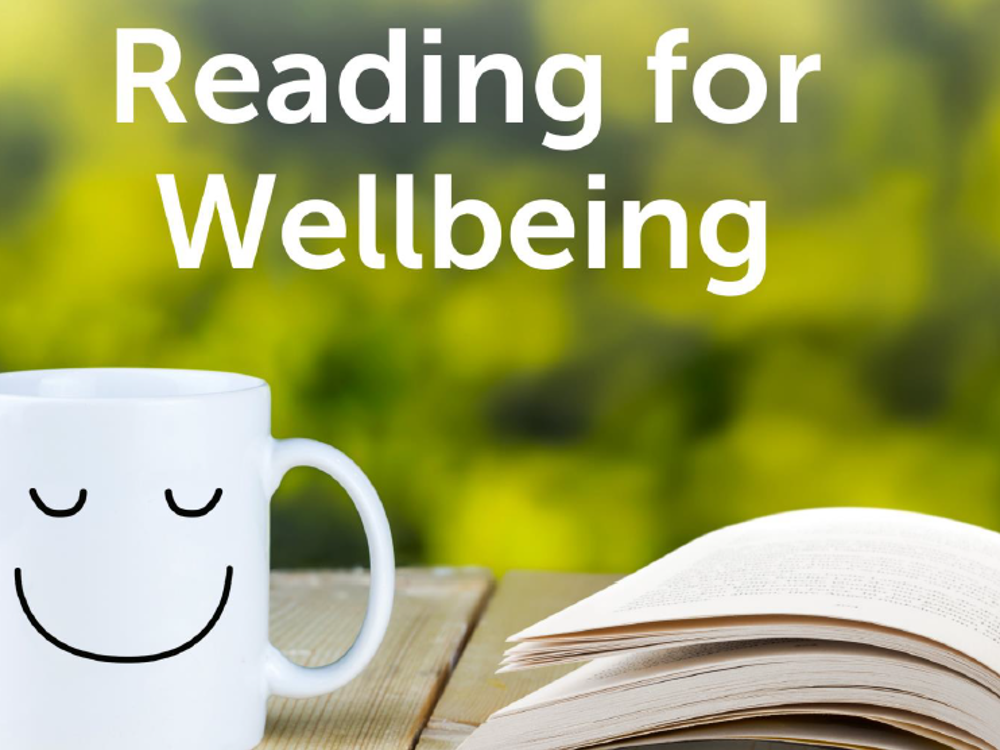
Reading for wellbeing: library-based
This course is designed for library staff who want to use reading for pleasure as a way to help improve wellbeing, through one-to-one conversations or group settings.
You will learn how to start positive, reader-centred conversations with everyone, including people who do not see themselves as readers or who have not read for pleasure for a long time. You will discover practical techniques for listening, making meaningful reading connections and suggesting books and other resources that reflect people's interests, experiences and needs.
Your Mentor will give detailed feedback and support on your tasks. Their role is to use their experience to stretch your thinking and to help you adapt the course content to your own workplace and your role.
We are grateful to the crime writer, Ann Cleeves, who sponsored the development of the first version of this course. Ann is a passionate advocate for the wellbeing benefits of reading for pleasure.
11 staff completed · 7 services
Learning Outcomes
By the end of this course, you will be able to:
Explain how reading for pleasure can influence wellbeing and why it matters in your library work
Recognise and value the different ways people engage with reading, whatever they read, however they read and however often they read
Apply active listening skills to develop meaningful reading conversations with both confident readers and those who do not see themselves as readers
Analyse book covers and other visual signals to understand what reading experiences books offer without having read them
Demonstrate how to introduce yourself and your Reading for Wellbeing role in plain, friendly language that puts people at ease
Create a welcoming library space and establish regular drop-in sessions where you can engage individuals and groups in reader-centred conversations
Select and curate a diverse collection of reading materials across multiple formats that opens up reading choices and promotes wellbeing
Plan and deliver group sessions using practical tools and conversation starters that help people explore their reading preferences and discover new reads
01 Getting people reading
- What is a reader?
- Love it or loathe it
- The reading experience
- People who don’t do books
- Engaging with parents through their children
- Listening skills
- Finding connections
- Explaining your role
02 Running a Reading for Wellbeing session
- Creating a welcoming space
- Drop-in sessions
- Group sessions
- A session for families
- Introducing your work to other professionals
03 Building your resources
- Choosing a book by its cover
- Using different formats
- Graphics for adults and children
- Range and variety
- Capsule collection: Books to cheer you up
How long do I have to complete the course?
You can start any time and work through the material at your own pace.
Do I get a certificate?
Yes. A certificate is issued automatically once you've completed the self-assessment.
Can my whole team take it?
Yes - bulk discounts on 10+ places. Get a team quote →
What format is the course in?
Online text with illustrated examples, interactive exercises, audio and practical exercises you complete in your own library.
How accessible are the courses?
Self-paced with adjustable text size, width and contrast, plus an audio version with read-along text in every course. More about accessibility →
What learners say
I have absolutely loved this course and everything I have gained from it has been so valuable. Thank you for the brilliant feedback. I learned a lot from my mentor and I would feel a lot less confident, even on completing the course, if I hadn’t had their guidance and suggestions.
Thinking about age and genre signifiers in book covers was interesting. I hadn't thought much about age signifiers for adult books except for the difference between adult and YA or children's books so this gave me a lot to think about. Having a personal mentor made me think more deeply about the content of the course. Thank you very much for everything.
I found the clear language and explanations in the course very helpful and I enjoyed the activities relating to my own personal reading. In Module 2 - the activities on book covers and the guidance on feelgood books for the final task were stand out. Working with my mentor was fabulous - thank you for all the great feedback.
This has broadened my scope and changed how I would approach finding a good read for somebody. I would have traditionally said 'what kind of books do you like' and realise now there are many more ways to find out and that the conversation can often be way more important than the end result. The discussion with my mentor was extremely beneficial and really astute. Some great resources included which I found really useful to research and elevate our own information - this was definitely the main highlight and I am so glad I had access and will be going back over the notes for sure in the future.
Some great ideas to get you thinking about what reading actually is or can be for people eg. doesn't have to be straight up book reading it can be browsing a beautiful picture book or reading to your grandchild or flicking through magazines online. It definitely made me stop and think and plan new activities.
While I recommend books and other sources of reading to people on a daily basis, this course has given me time to pause and reflect on the positive impact that a good read can have on somebody's life. The evidence of impact on reading for wellbeing was very compelling and proves reading to have all the positive influences on increasing our thought processes, memory, empathy and compassion. I am confident that I am now better equipped to find a good read for somebody, especially ways to find connections when recommending books to people who are not that interested in reading. I definitely found the discussion with my mentor very beneficial and I took on board all feedback given and hope to implement this going forward.
£150.00
per place
Other public library training courses
Playing your part in the library welcome
A fast, practical and enjoyable course in active customer-care skills, specific to libraries.
£25 / place
Managing first impressions
Learn to see through your customers’ eyes and take practical steps to improve your most important spaces.
£50 / place

Observation research
Use these techniques to get beyond a familiar workspace to what your customers actually see and do.
£150 / place

Talking with readers made easy
What do you say when someone asks you if the library has got any good books?
£25 / place